








Mirela Cabral •
Abertura:
21 de November de 2023
Exposição:
De 21 de November a 22 de December de 2023
About Mirela Cabral
Mirela Cabral was born in Salvador, Bahia, in 1992. Lives and works in São Paulo, São Paulo – Brazil.
First Things
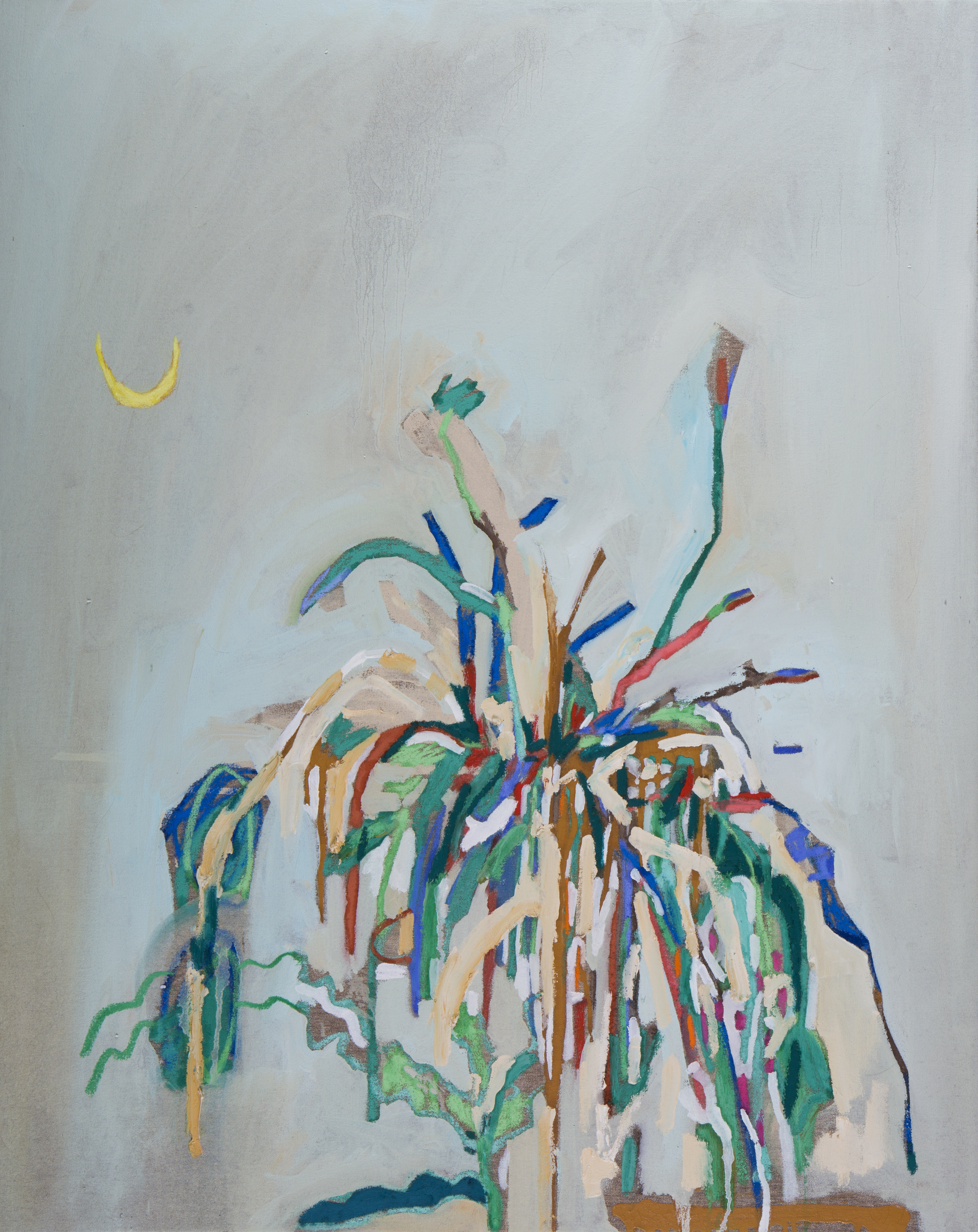
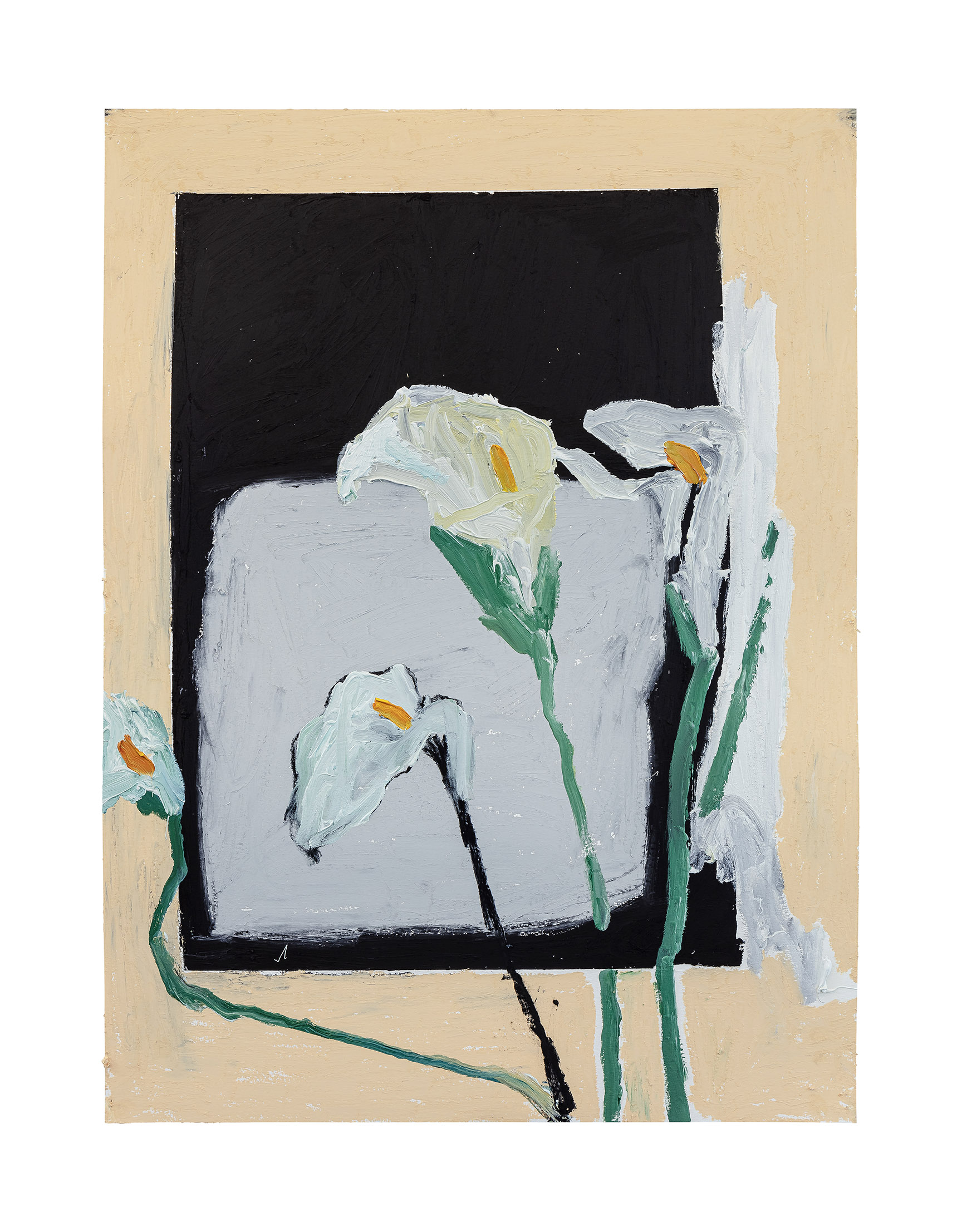
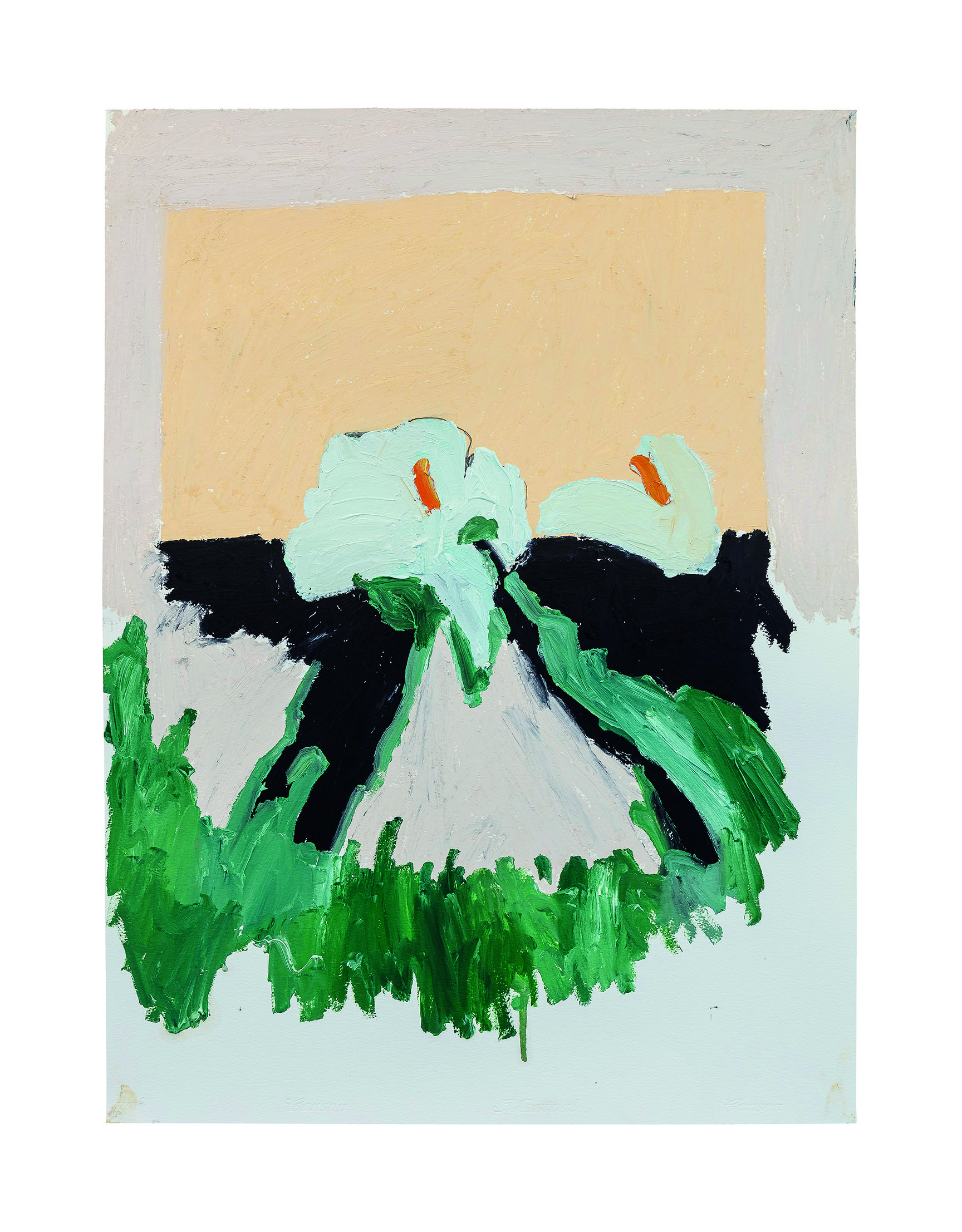
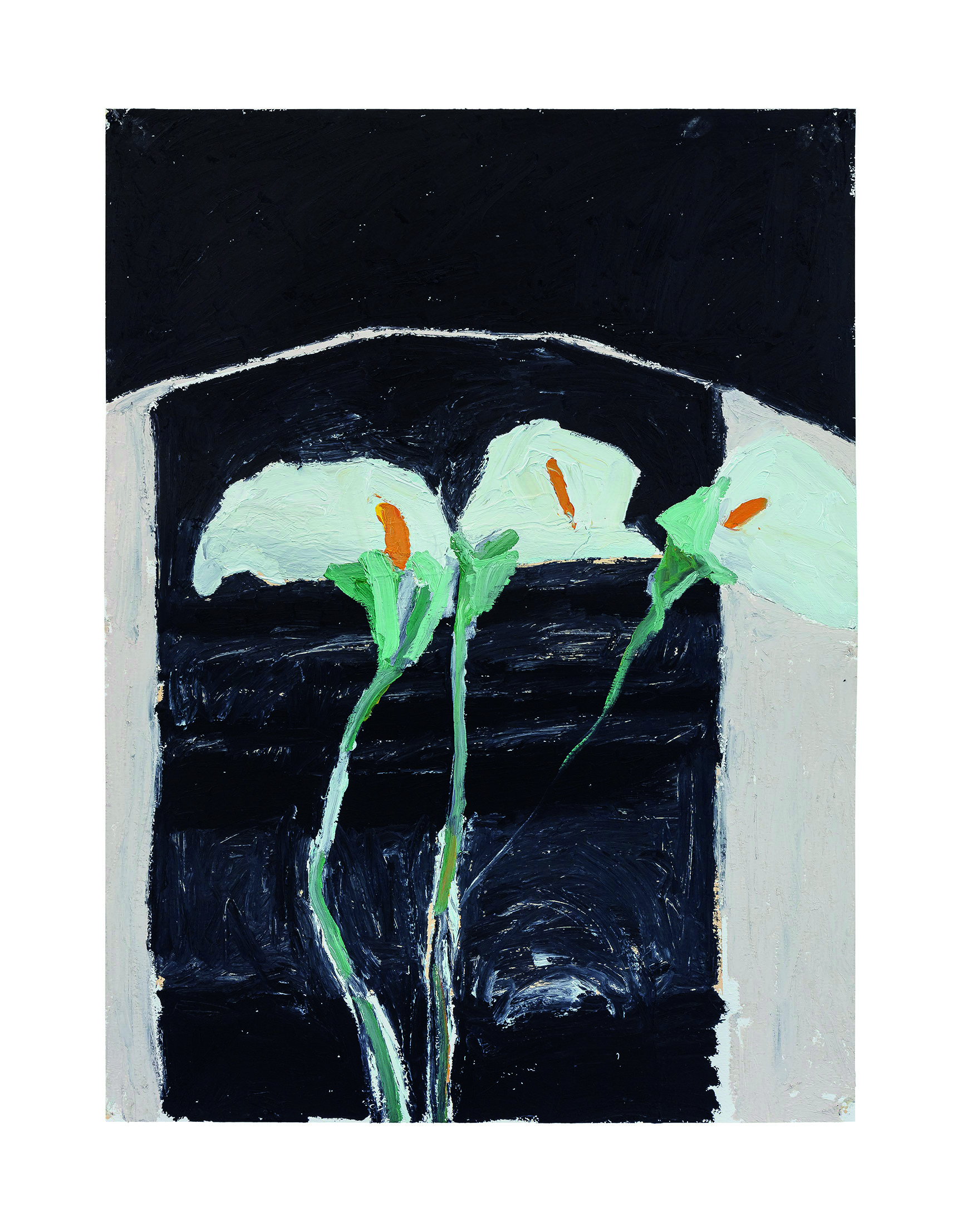
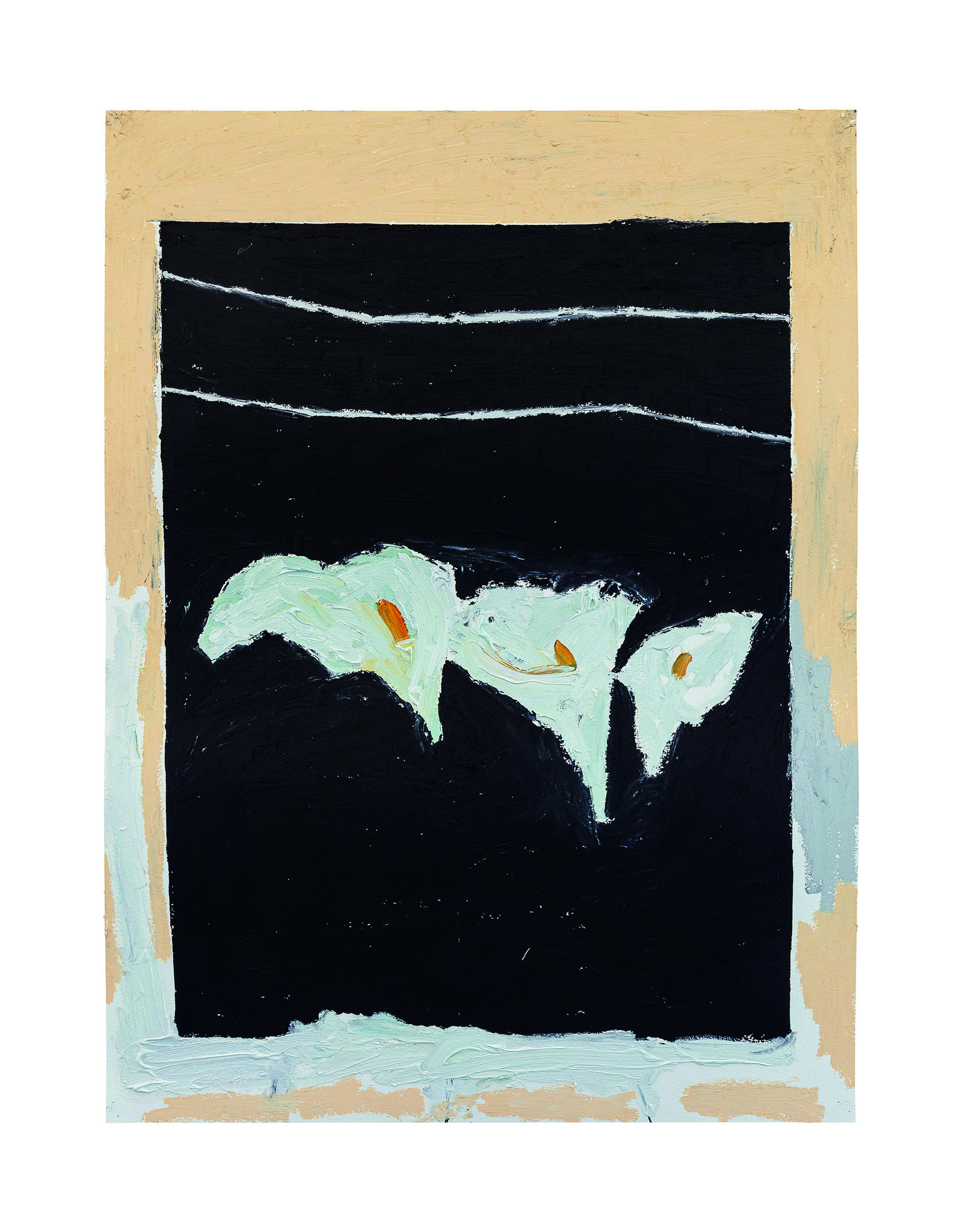
One of the main roles of the painting (the good painting) is to communicate/trigger sensorial stimuli. In a moment in which those who practice this craft have been directing their interest to a sort of more direct “message”, Mirela Cabral searches for something prior, or as the title of one of her artworks, the First things. If her brushstrokes, gestures, pictorial, chromatical palettes and textures emanate, in the most diverse settings that assume in their poetics, uncountable states of mind. Colors and textures are the most primary ways that a living being learns how to read the world. They are, therefore, the most democratic sensorial experience there is. You might not know a particular color or texture, but you may feel it, perceive it. When they’re worked in a pure state, denuded of “disguises”, they offer us feelings and states of mind in a more direct way. Mirela Cabral talks about this space. You don’t need to understand painting to feel moved by one of her artworks.
For dealing with states of mind through a keen sensoriality, Mirela’s painting doesn’t fit in “boxes”, “phases” or chronologies. There’s a path, but the perception of the numinous transits through a field that transcends logic. And we talk about someone who explores and experiments with painting relentlessly, is interested in it, thinks it and communicates through it. The previsibility and formula won’t show up here. One can’t name such “first things”, but can feel them.
Going through this way, it’s reductive to classify her painting as “figurative” or “abstract”, categories that age continuously and become bounding. There’s a figure over there. They populate in their composition, sometimes in big dimensions, garden remains, balconies, architectures, paths and people. But ambiguous gestures, masses of paint, lines, stains and strong brushstrokes show up to prove that it’s about the painting itself we are talking about, and not about the theme. The set up assumed over there, that might sound familiar, is just a possibility, a pretext, a possible arrangement. And then we reach a high point of her poetics: Mirela, as someone who observes the world through painting, creates her painting through something that exists in the world. A view, a table arrangement, an architectonic element, a memory, a song: every interesting sensorial stimulus, as random as it sounds, serves her as raw material. A lesson she keeps with affection is taught by her mother, who guided her to organize her stuff and her surroundings through “colors that exist in nature”.
This exhibition gathers two poetic directions Mirela experienced throughout the last months. Here we don’t talk about closed series or finished sets, even because our artist doesn’t intend to drain any subject. They’re about pictorial experiences that she produced and has been producing, allowing possibilities of thinking the painting and its sensorialities originated from her.
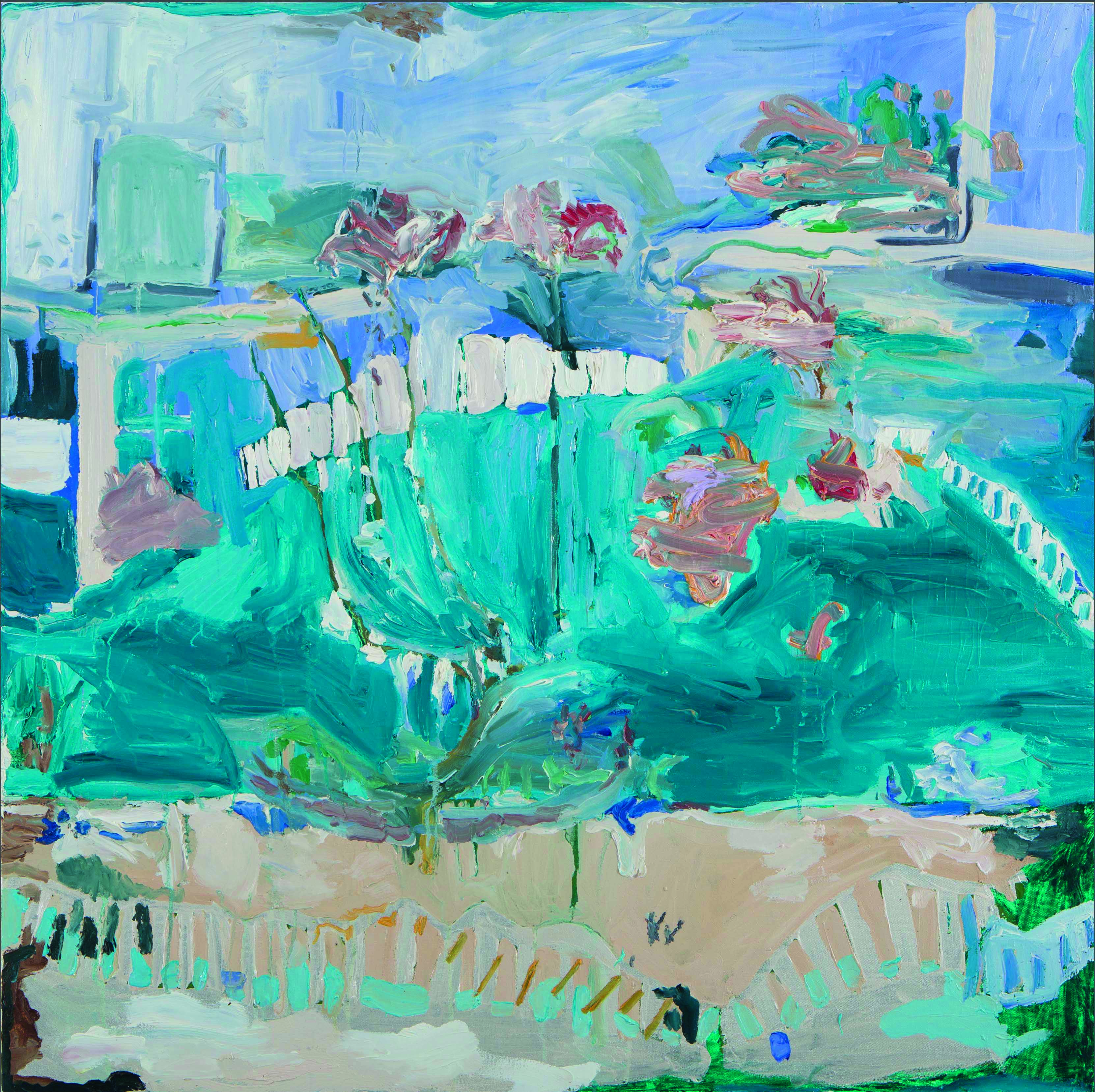
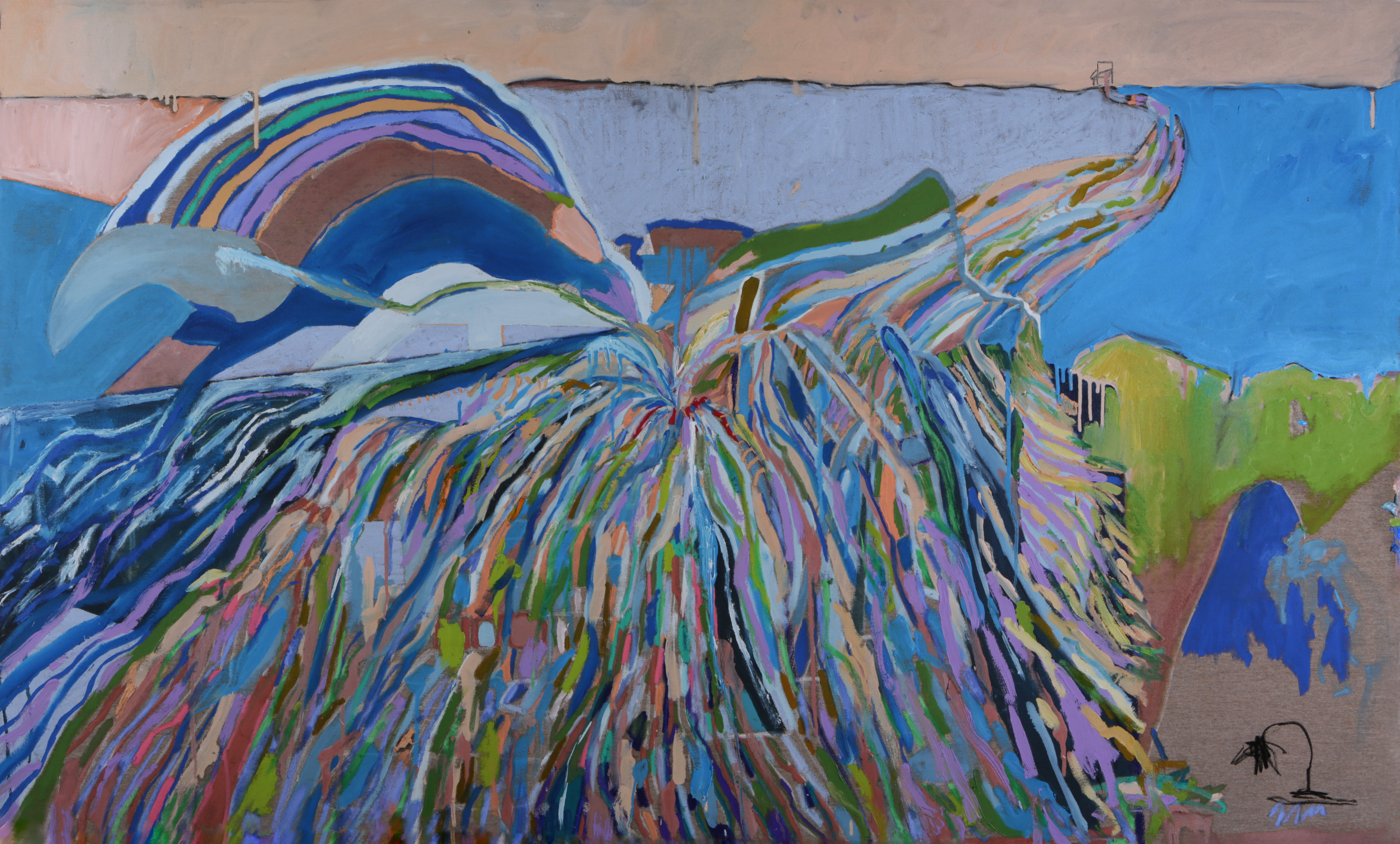
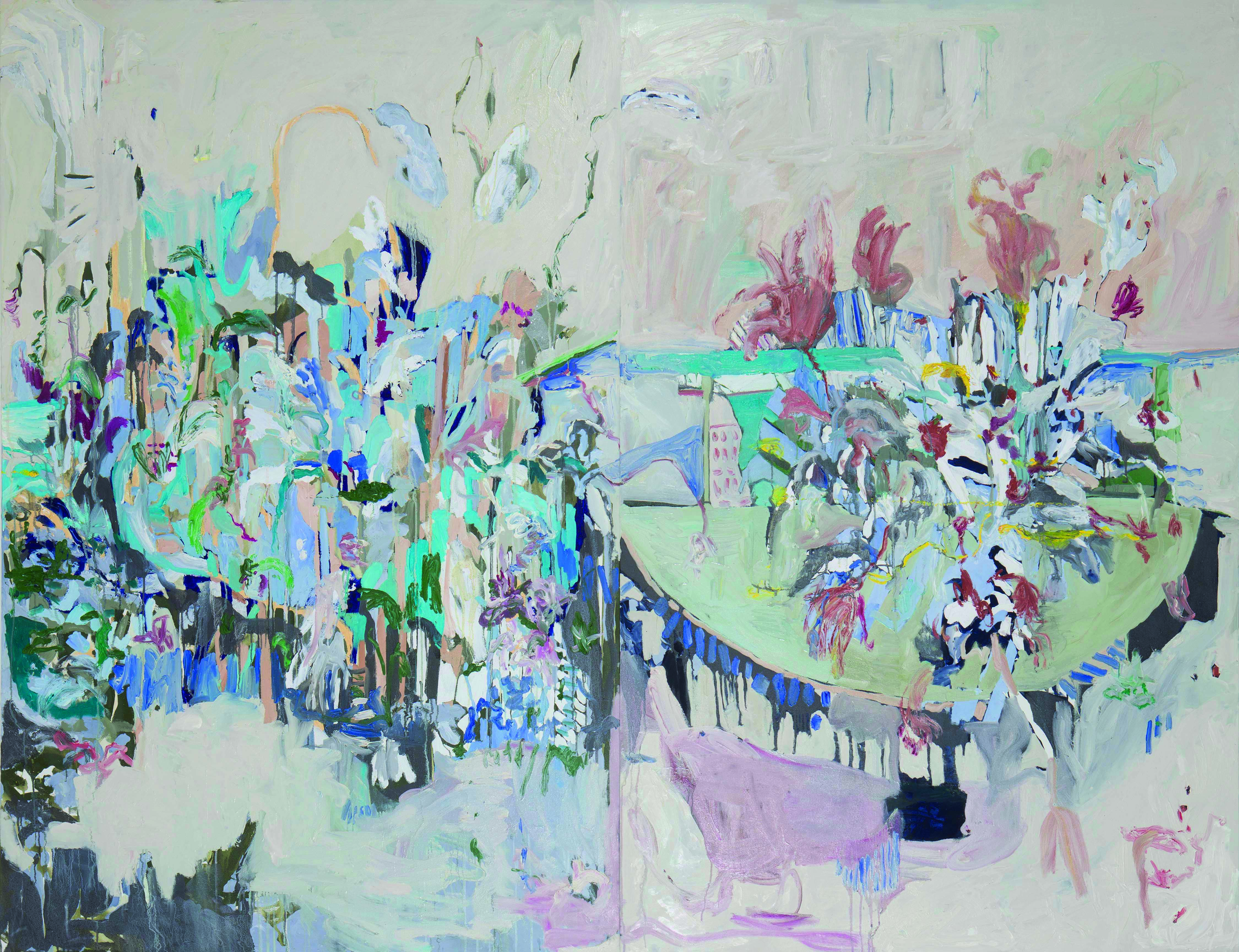
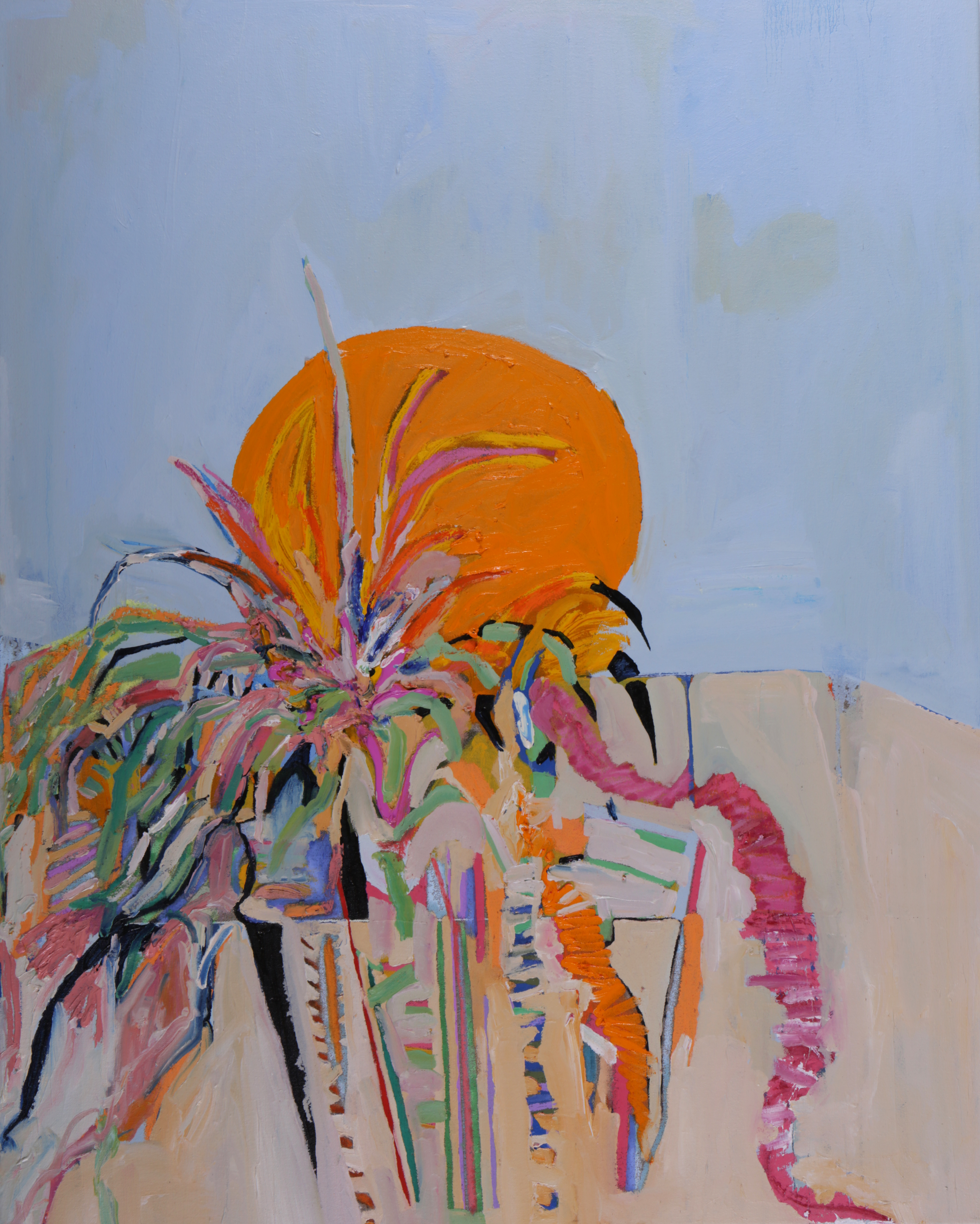
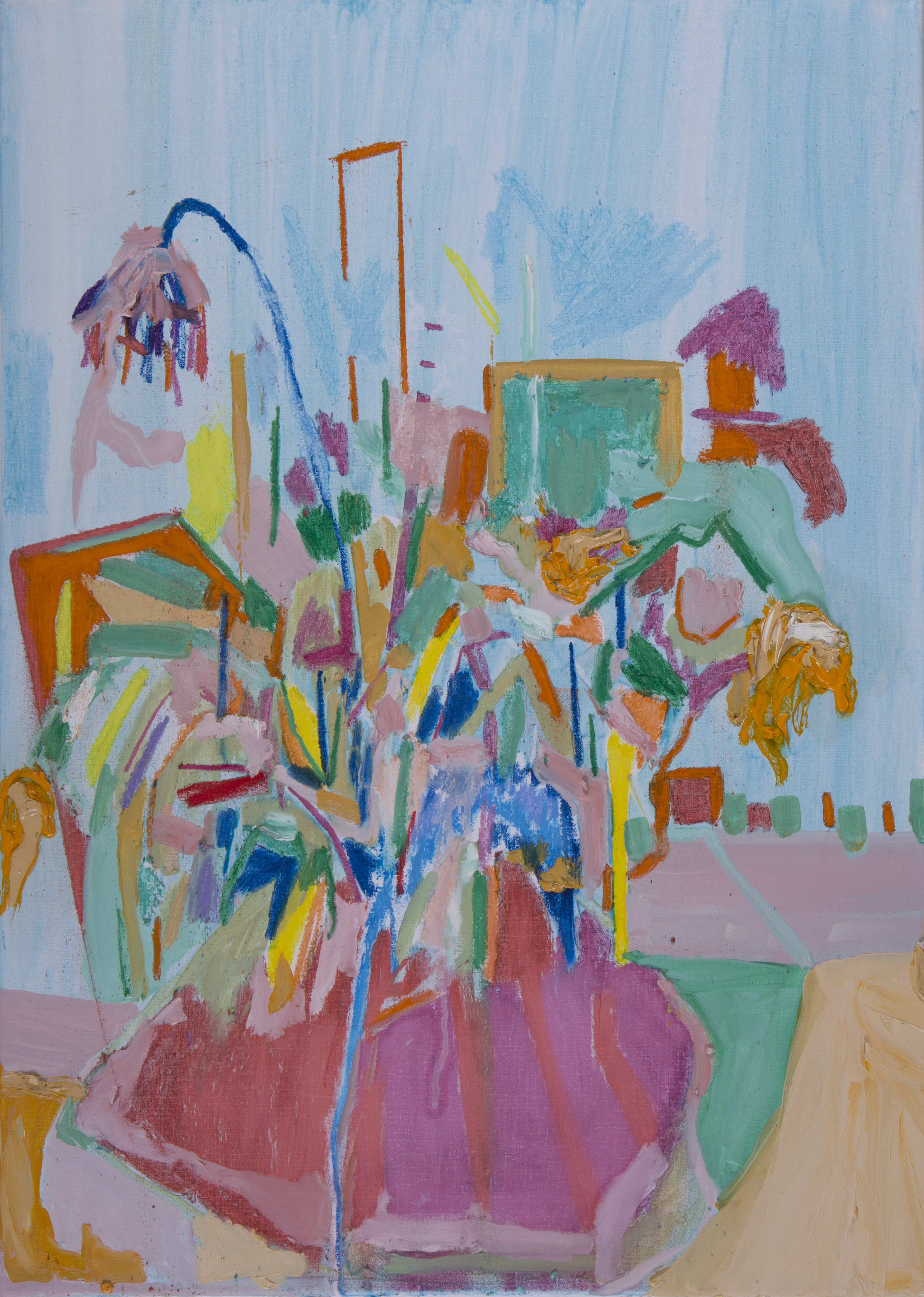
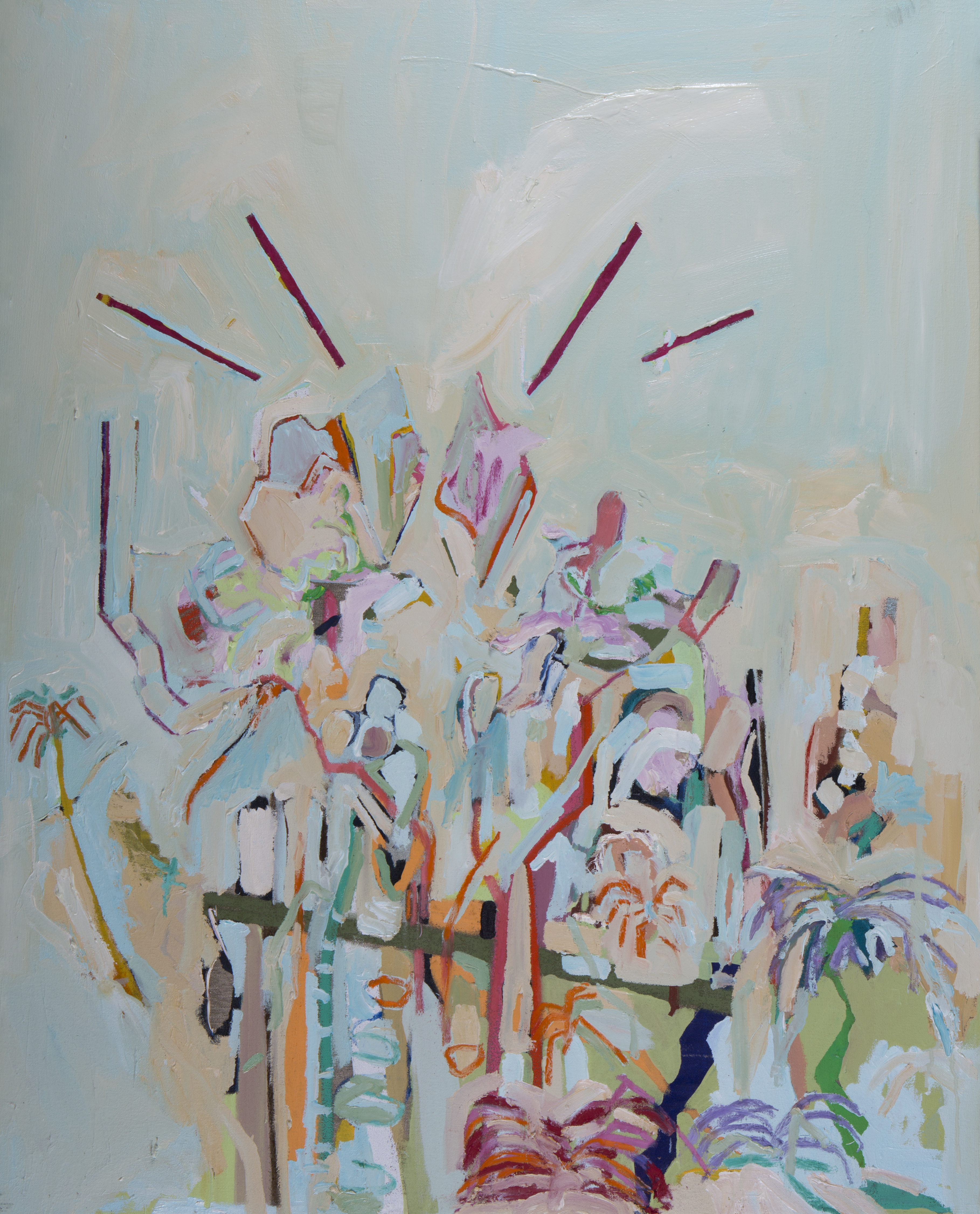
From the first “direction”, a group of colorful artwork is emerged, exuberant and luminous, which titles bring the allusion to toponyms (Barra, Casa da Mãe), gestures (Batuque), elements (Oferenda, Barbalho e Lírios) and songs (Anos Blues). They are paintings that pinch elements of dead nature, landscape, portraits and other pictorial genres, combining them with pure pictorial elements, with masses of paint, textures and brushstrokes. In some of them, such as Casa de Mãe and Barra, it seems there is a particular suggestion of an atmosphere, maybe due the use of a smoother brushstroke and large usage of blues and its tones, colors that suggest infinity spaces. The artist, not attaching herself to any type of mimetism, ends up in the atmospheric through her essence: suggesting depth and openness. In the case of the second one, even there’s elements of a more “tectonic” order , with some white symbols in the upper canvas, the predominance of a blue symphony, that goes from cerulean to turquoise, with a few botanical remains that thrive through the canvas.
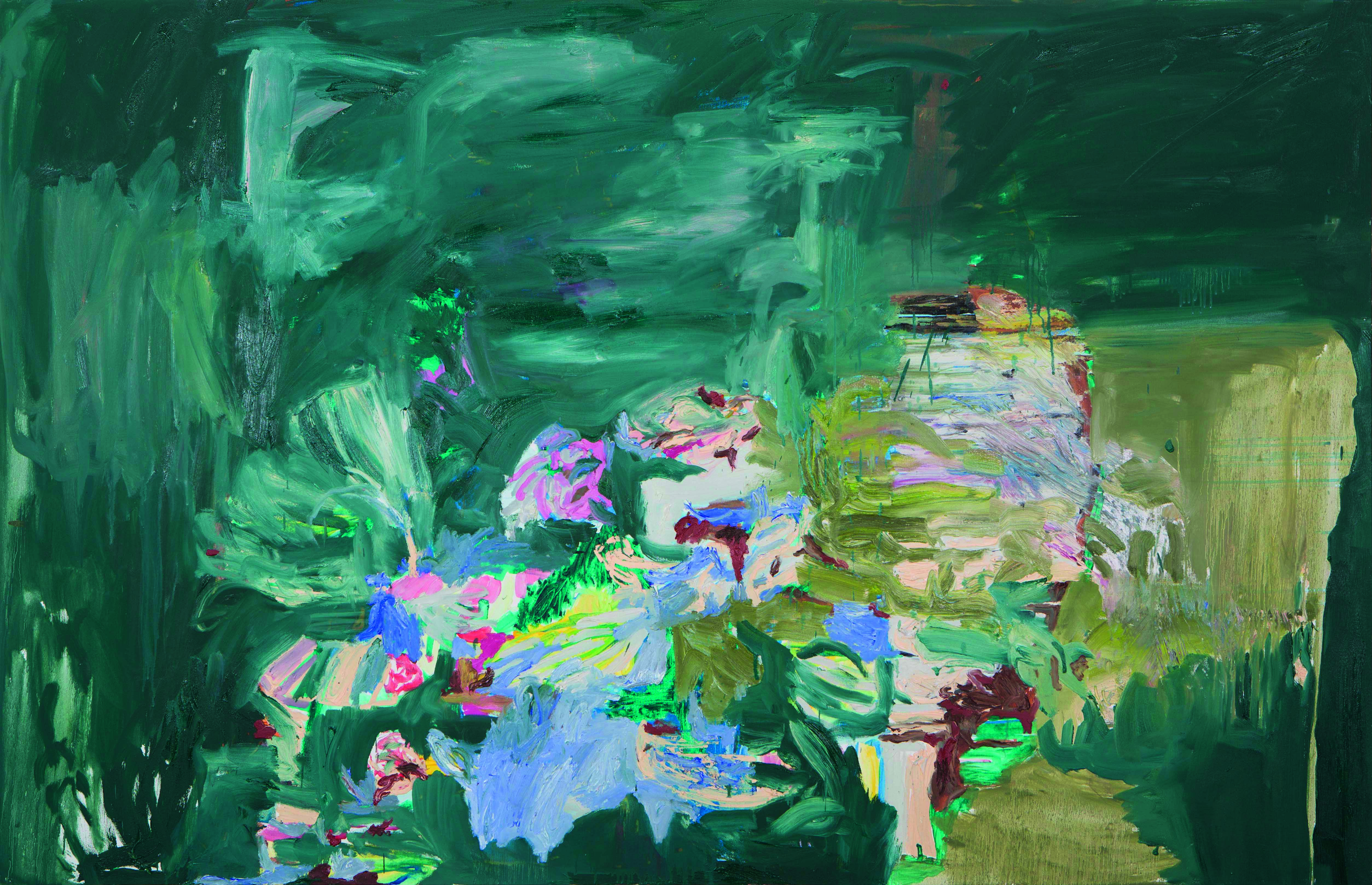
Another interesting work of this moment is Oferenda. A word associated with religious rituals, the same that consists of offers and gifts to spiritual agents. It prevails in this composition an undefined green background, of which, when close to the edges, it gains a very dark and almost opaque color, but when it approaches the central area of the composition it merges with the white, obtaining a foggy character, almost ethereal. Right below this green-white rendez-vous, blues, beiges, roses and purples arise in a flickering way, as chromatic flashes. If the background seems to suggest something impenetrable, that doesn’t fit in our comprehension, the main pictorial adjustment, fabricated by this exuberant chromatism, that seems to suggest a trial of communication with the intangible. The same can be said about Yemanjá, of which, among a blue vastness, shades of green and blue seem to point to something that lives in there. To paint is to establish relations between colors, and that’s exactly what Mirela does. From an unknown and mysterious blue, it blossoms the living and the organic. Everything is intertwined.
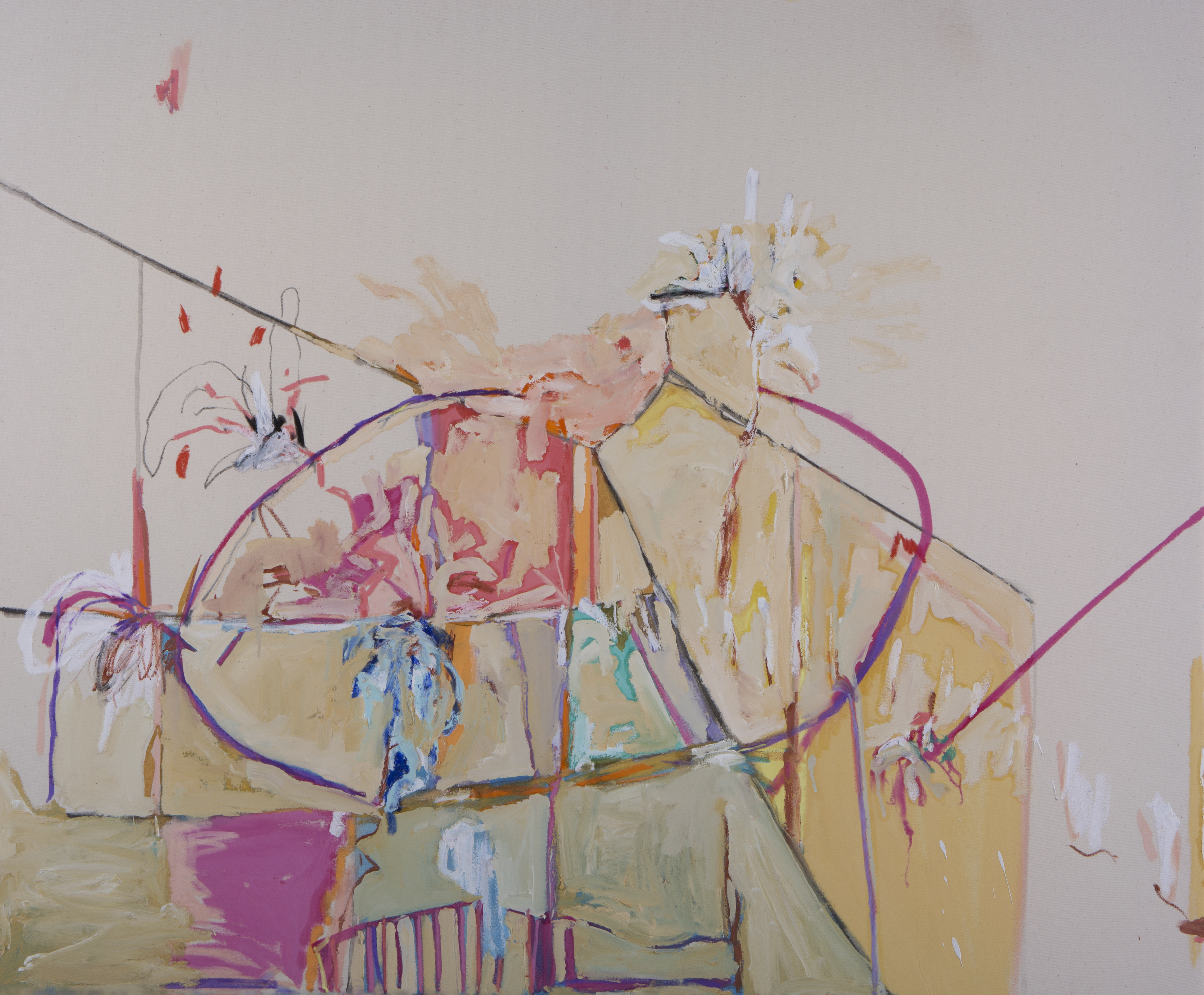
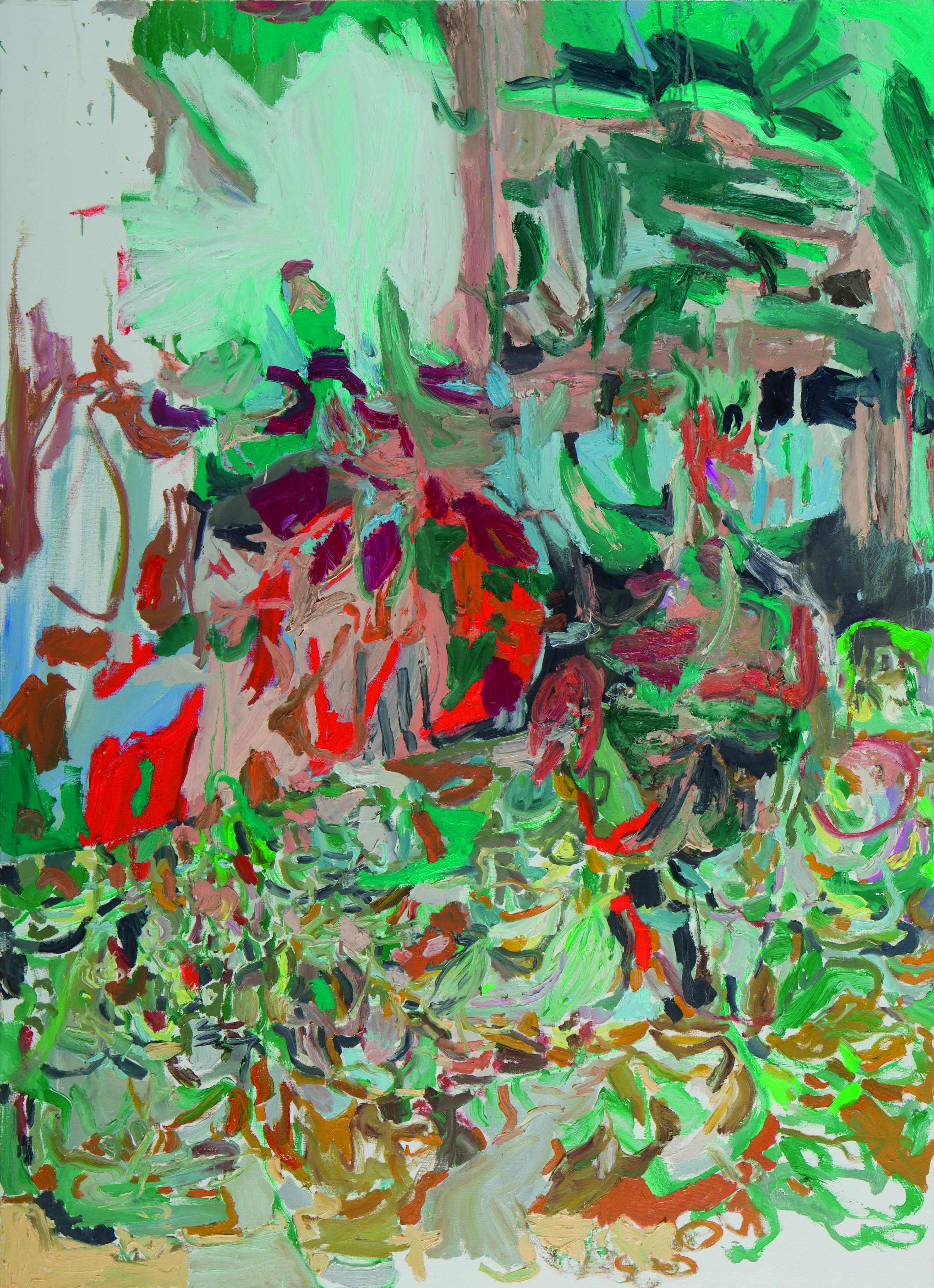
Batuque is highlighted due the living outbursts of red amongst a beige background with red notes. Here we see an approach to music. In the same way that the sonorous batucadas[1] stand out amidst silence or a concert, here they explode, bringing the dynamism and pulse to the composition.
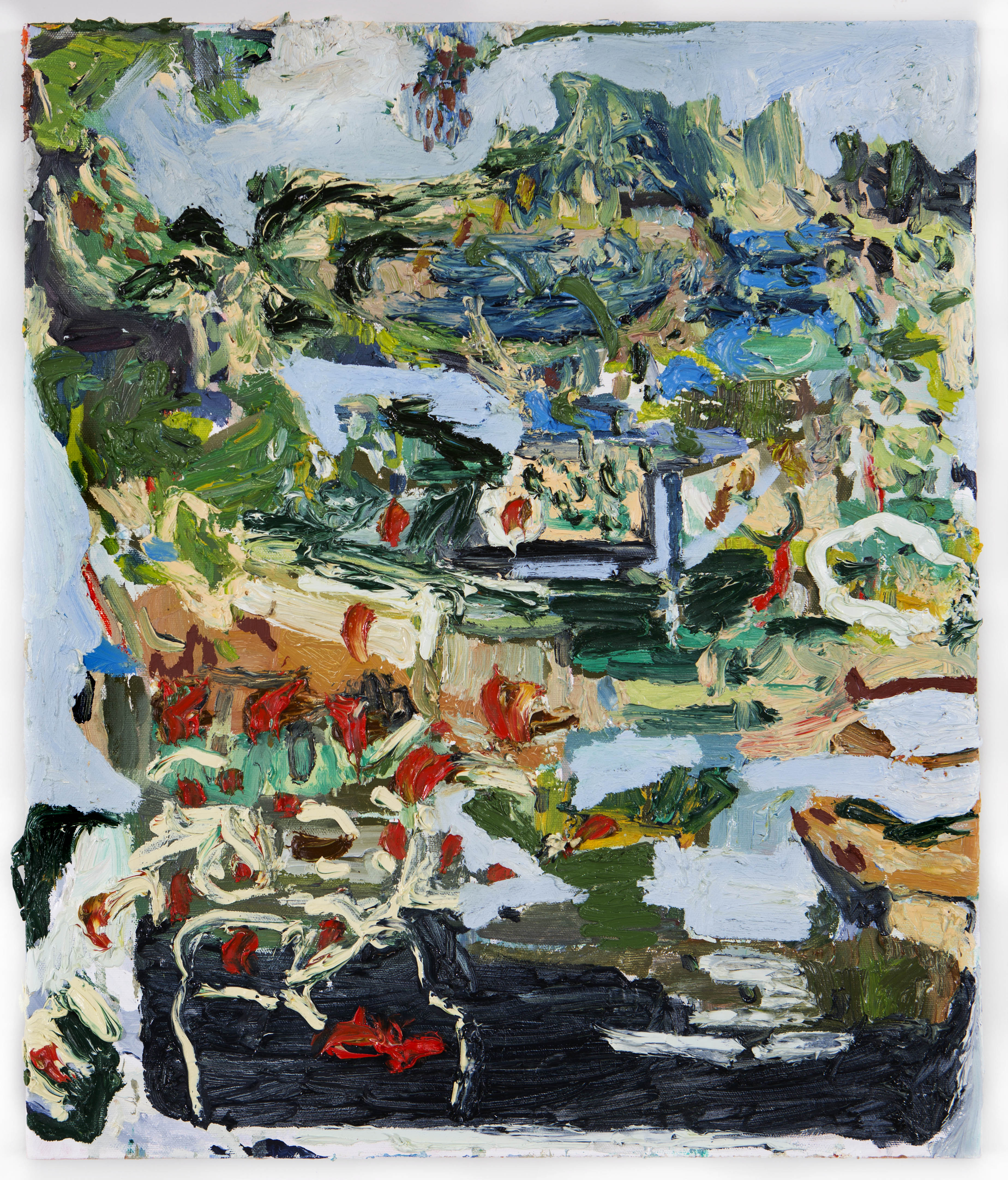
Then we get to the paintings of the second direction. The color still shows up, but it loses a little bit of its luminosity. The consistency also changes: the atmosphere from before converts into a humid, swampy, dense matter. The colors get sober, more terrestrial. The paintings from before seem to aim at the cosmic, the infinity, the numinous. The ones from these have something skeptical: they acknowledge themselves as paintings, and they think themselves as paintings. Chegada presents a similar composition of a flower arrangement, but it’s not the flowers that glimmer. Its reds and roses have something sanguineous, visceral. Its greens transpire more than they breathe.
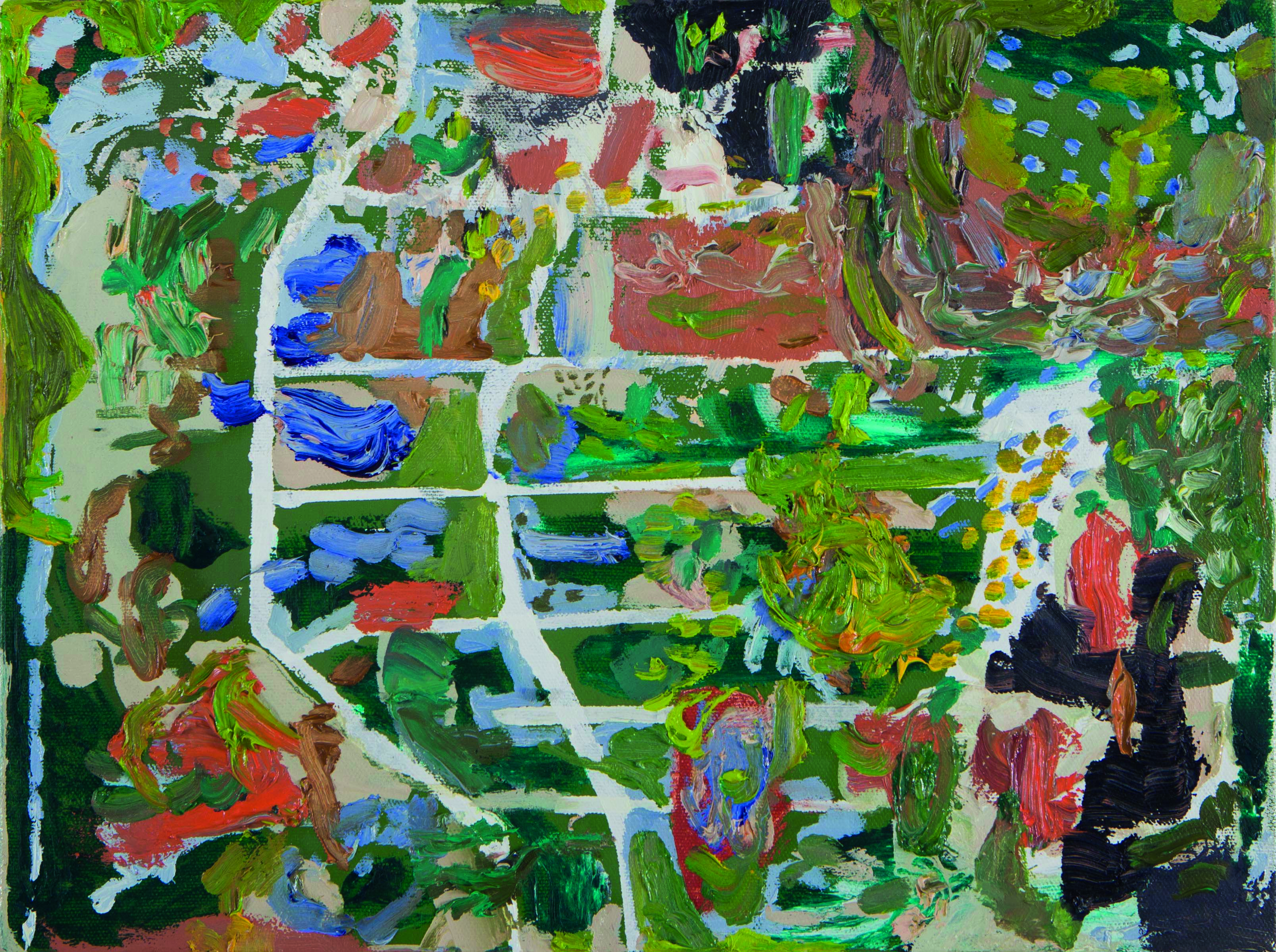
Dentro, fora presents an arrangement of greens and yellows of a humid consistency and telluric shine. The framework has something suffocating. Even though the title alludes to a “outside”, the few remains of light blue that grows into the composition doesn’t seem to announce the exit of anything. They seem tangled among a dense bunch of pigment.
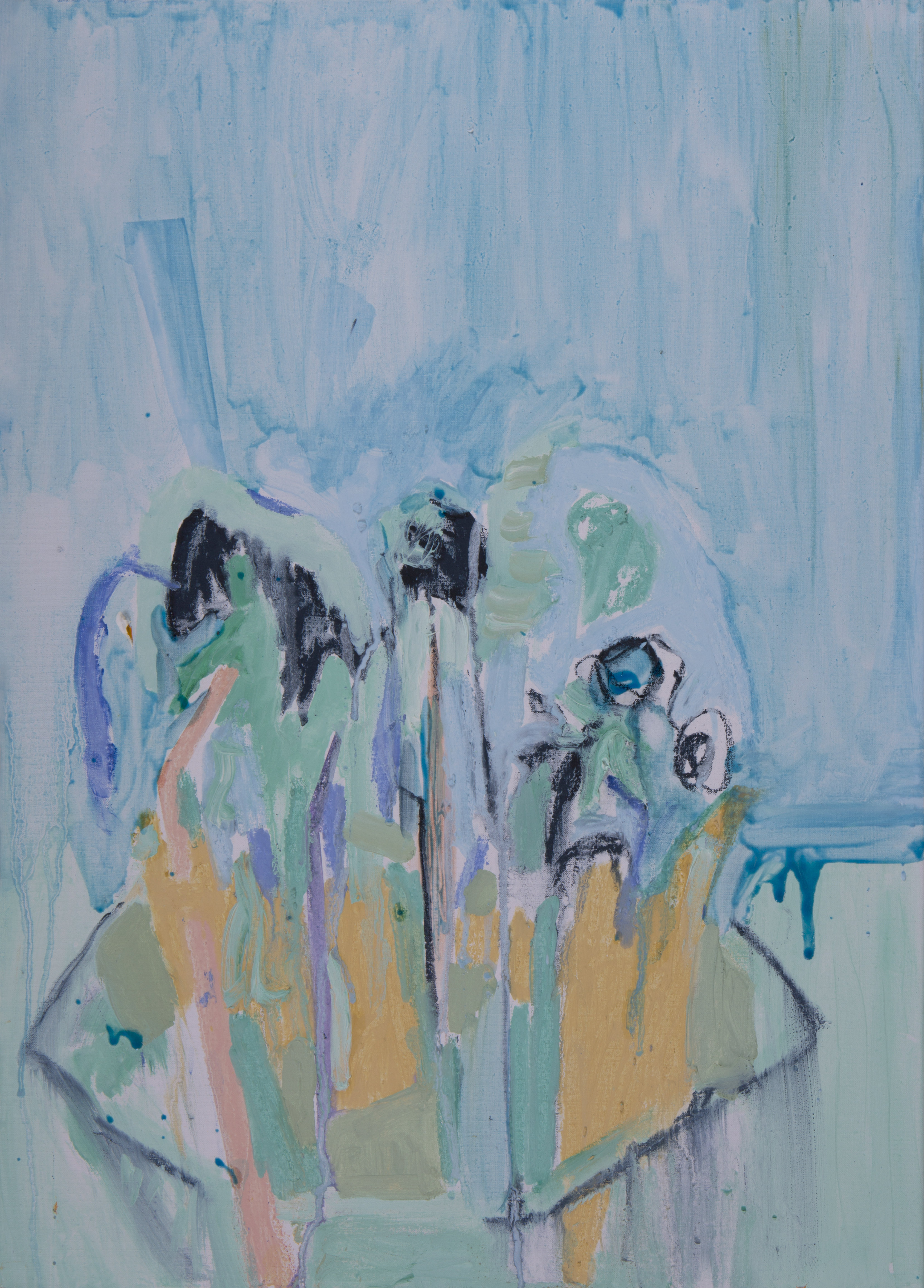
Gosto da chuva has an ambiguous title. We get confused if we’re in front of the artist’s esteem for the meteorological phenomenon or if she holds up on the “taste” of it[2]. The fact is that what vaguely resembles a landscape seems wet, doughy, melted. In the upper part of the canvas, the appliance of turpentine brings a washed aspect, as if a great mass of water has knocked down the rest. And the feeling is a generalized humidity, of which a simple line, similar to a handrail, seems to be the only one to escape unharmed. In these works Mirela evokes the matter, the tactile, the teluric, the viscera.
Our artist, by constructing her painting through that which crosses her path, doesn’t intend previously unseen endeavors, inventions or revolutions. The painting has an entire history behind, and Mirela knows it. What is left, based on everything that has preceded her, to offer her version, her arrangements and point the way to the pictorial craft.
Theo Monteiro
[1] Drummings
[2] Translator’s note: “gosto” in Brazilian Portuguese can refer to the verb “gostar” (to like) or to the noun “gosto” (taste).
Abertura:
21 de November de 2023
Exposição:
De 21 de November a 22 de December de 2023