


Paulo Coqueiro •
Abertura:
13 de July de 2023
Exposição:
De 13 de July a 12 de July de 2023
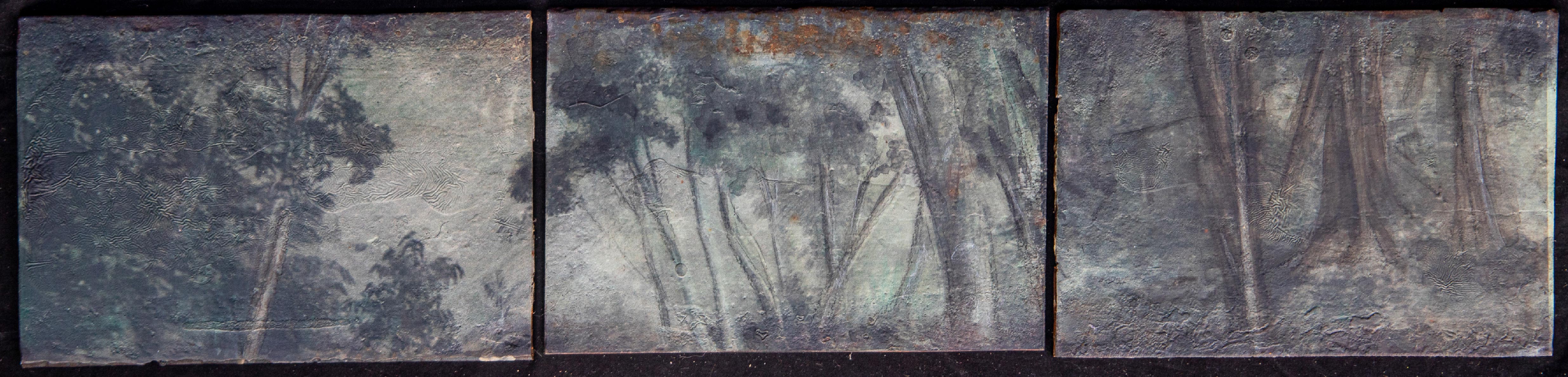
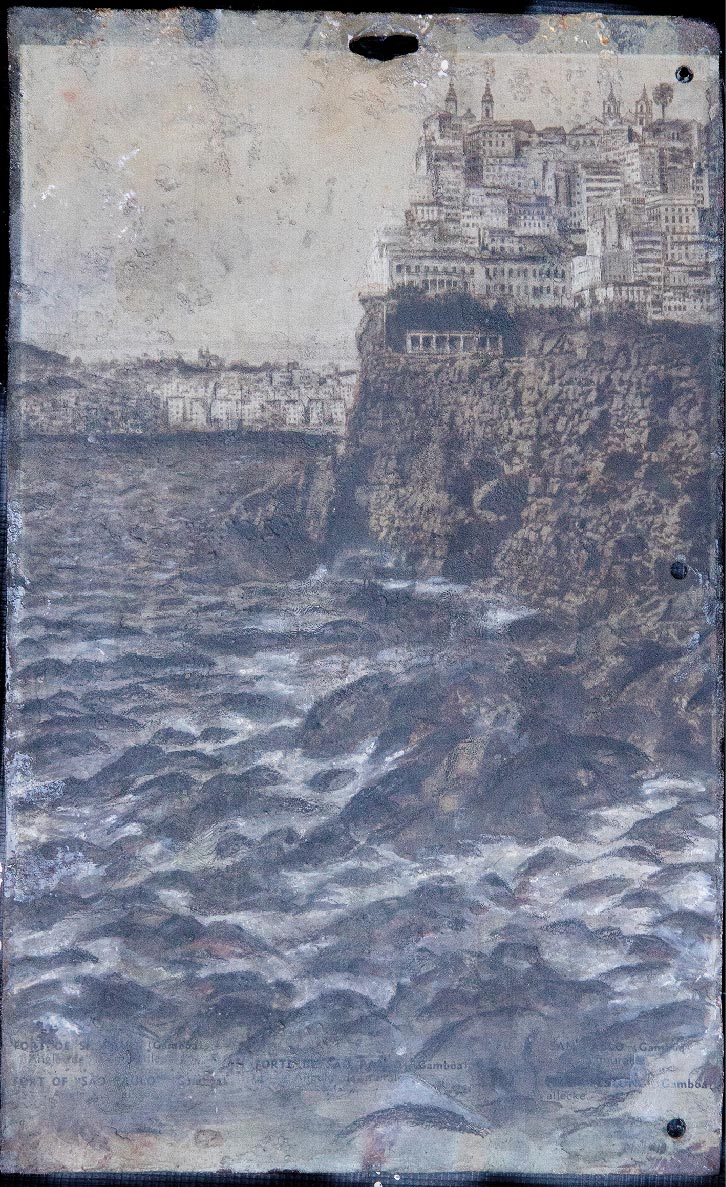
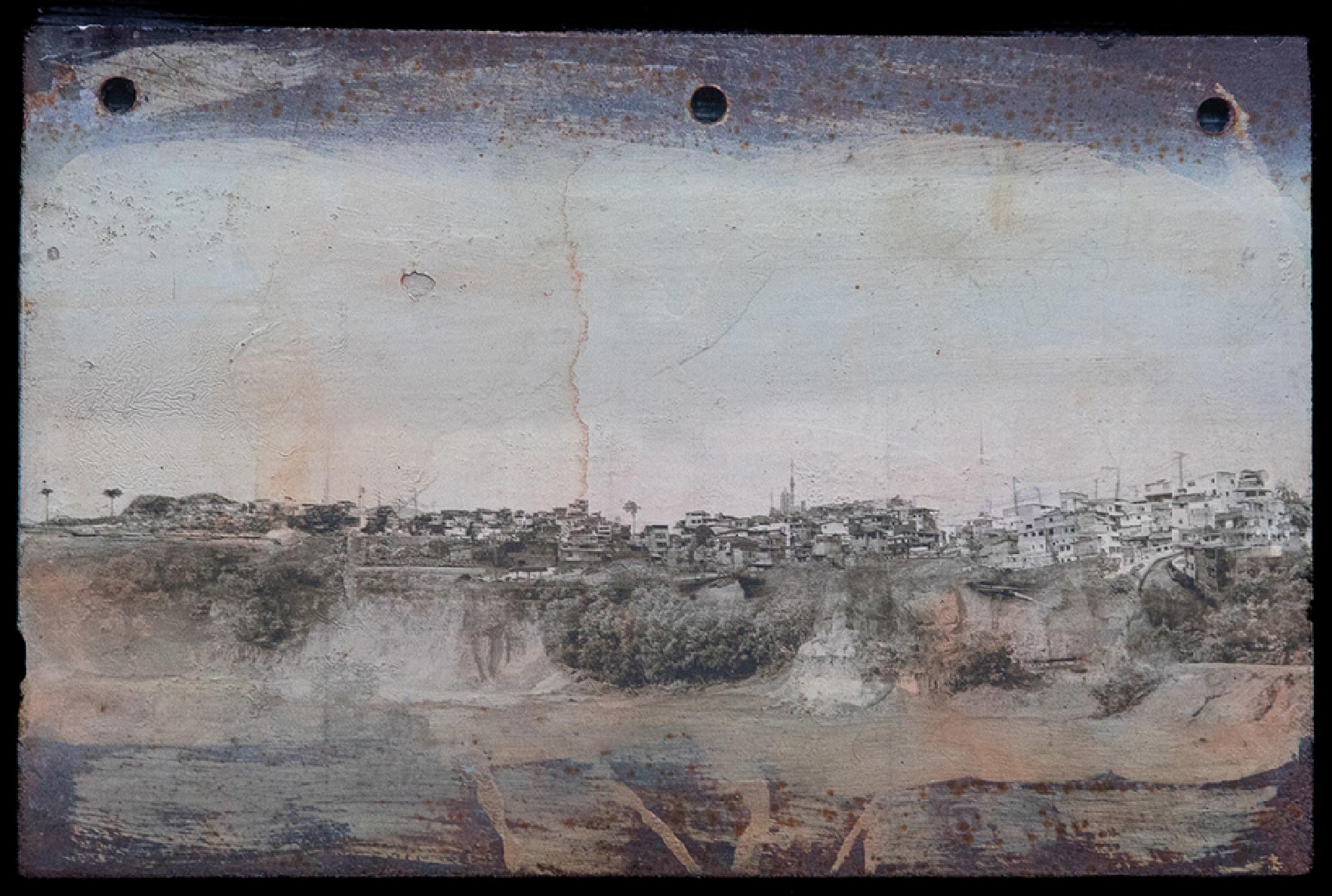
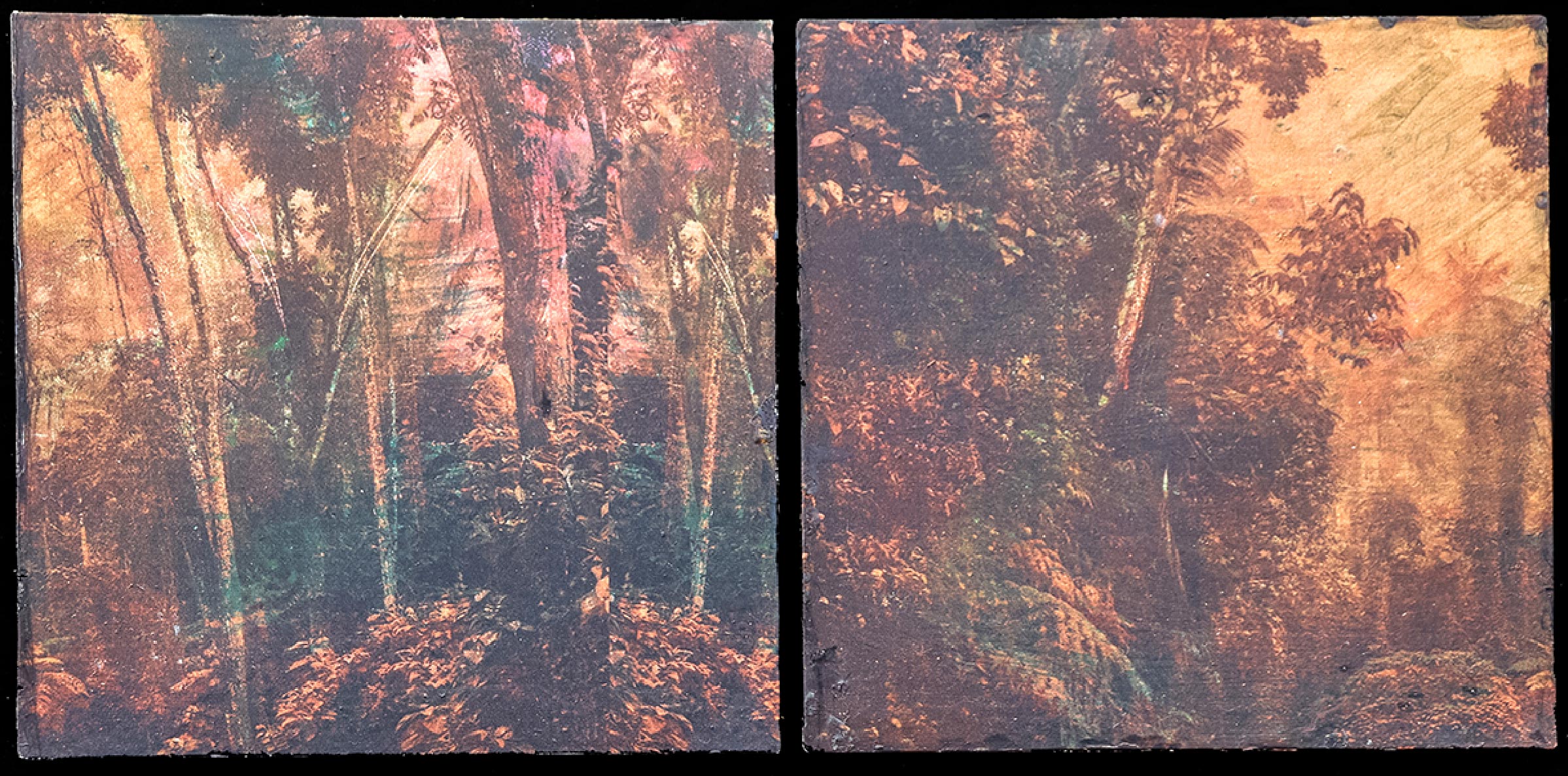
Paulo Coqueiro presents the exhibition “Outras Expedições”, where he presents questions related to uncertainties in the production, uses, circulation and politics of images, works from his latest research, addressing the limits of photographic language as an inspiring element to create fictions. The exhibition is curated by Alejandra Muñoz and has a presentation text by Junia Mortimer.
Paulo Coqueiro, born in Boa Nova, Bahia countryside, is a Bachelor in Agronomy with a masters in Geography by the UFBA. At the moment, he’s doing his PhD at the Santiago de Compostela University, Spain, being co-oriented at the UFBA’s Communication School.
Coqueiro’s artwork approaches fundamental questions related to the production, usages, circulation and image policies. His contribution to contemporary art has given him recognition and international prizes, including the participation at Houston’s FotoFest Biennial, in 2020, and the prize of the VII Triennial of Photography Hamburg, in 2018. He was the first Bahian to be awarded the Pierre Verger Photography National Prize.
The artist has already exhibited his artwork in solo exhibitions in renowned festival and galleries around the world, including the Photolux Festival – the International Biennial of Photography of Lucca, Italy; the Lianzhou Foto Festival, China; El Centro de Fotografía, Montevideo, Uruguay; and Palacete das Artes, Salvador. Also in collective exhibitions, such as PhotoVisa, in Krasnodar, Russia, Bahia Art Museum (MAB) and the Museum of Modern Art Bahia (MAM/BA); at the Museum of contemporary Art – Dragão do Mar in Fortaleza, Ceará; and also in the XI Recôncavo Biennial, São Félix, Bahia, among others.
* * *
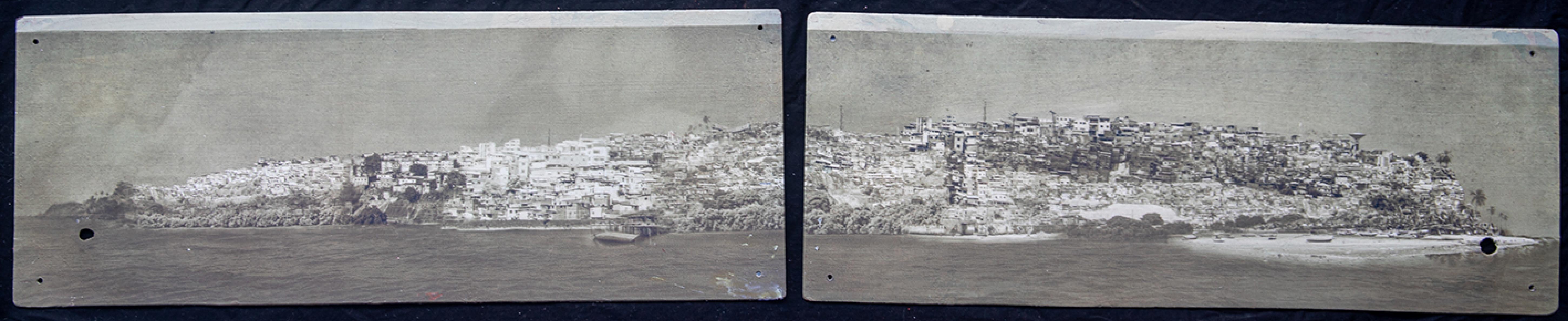
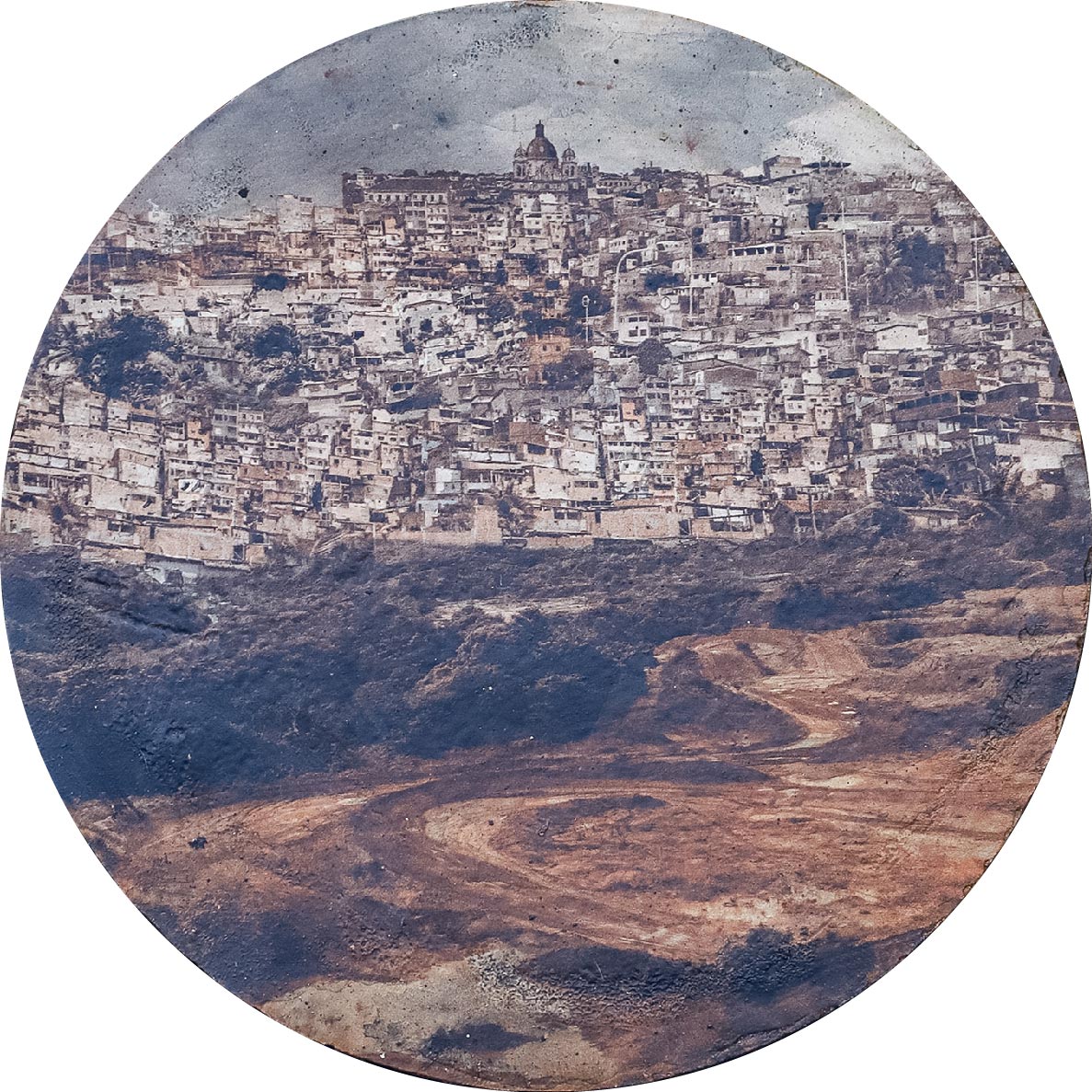
This work discusses the relation between image/city through a critical visual discourse and iconoclast landscape inhabited in Salvador, Bahia, highlighting their fragmentations and structural contrasts.
In a good measure, such an onslaught shows how fictional the images that always represented the city through the time are and brings up a new iconography, reorganizing that visuality that helped to generalize a Soteropolitan identity.
As a traveling artists of our times, Paulo Coqueiro made systematic expeditions, between 2017 and 2020, sometimes with planned routes through researches of landscapes on Google Maps, others times allowing himself to drift through the city, photographing sights of architectonic structures or traditional neighborhoods, from the rail suburbs, such as neighborhoods not associated to tourism, of deranged housing on the hills, of irregular habitation or formally established.
During this incursion period, he made more than 10.000 photographs and produced with them a series of city panoramas in digital collages. The inspiration for each new panoram was, almost always, a iconic artwork (of painting, a print, a drawing or a photograph), appropriated by the author, belonging to museums, institutions or private collections, produced since the foundation of the City of Bahia by military engineers, traveling artists, painters, illustrators and photographers, given that these last ones just got here on the Ides of 1839.
The composition of these new sights of the city, through displacement of landscapes, streets, buildings and architectonic structures to different whereabouts of their physical and temporal origins, creates oddity and emphasizes aspects of the not widely known city, integrating ambients usually disconnected, forging an interaction between past and present elements, leaving more evidently the ruptures, the differing and the seclusion between their multiple spaces.
Finally, these digital collages with the new sights have been printed in metallic plates, panned out from the junkyards. Over these metallic surfaces, Coqueiro made theses previous and posterior treatments to the print, using chemically abrasive products and making inventions with oil paint, pastel, pencil, sandpaper, varnish, resins etc.
This way, the printed metallic plates, of different shapes, thickness and conservation status, allows us to establish a comparison of those images of the past with the actual ones from the city. On the other hand, the ferruginous quality of the constituent material, vulnerable to the saliter and the time, shows the same insular precariousness of the city it predisposes to represent.
I read sum’where that eyes have hunger – or would it be the thirst first?¹ The image is the water of the sight. The touch to the thought. They’ve called this hunger-thirst voracity2. To photograph the city seems to get the river running that fulfills the eye, sometimes almost to indigestion. Notorious glare: what so desperately we want to see? What so little wants to be shown? Or vice versa.
A generous pieces of the unlearning of the imperialism fits
in a shattered shutter
In a reformed shutter
A almost obliterated shutter
The fact is to see is not enough. You have to take what remains, from the lenses and the junkyard, and to fold the reality, this metal almost heavy, with the hand of the sight. To sign into a leftover of city, the image – image which itself, half-city, has already given. To pour the image over the city, what is left of it, an artist wears the houses over the almost plume weight of the paint. The sound reverbers from the artcraft that super-lives on the fringe of Conceição.
In that slope the artifices are many, since before the Mulock panorama. Can you hear the irons?
Notice: you can also hear the frequencies of a heroic cry that remains botching the asperous surface, dirty of image. They’re the voices of the capitalocene3. This what you see and want to touch – see, but don’t touch! –, this remain of a city, artifact-image, is a deviation as the reinsertion, almost resplendent, in the capital’s wheel. We get the leftovers. Approach, get closer. One needs to drink with the eyes. We’re just confusing you to make you see.
For over six years, Paulo Coqueiro has made incursions in this city of Bahia, collecting images and metals. With the photographs he produces, the collages – that resembles, sometimes more, sometimes a less directly specific pictoric tradition from Salvador. In different junkyards, from Uruguai neighborhood until Acesso Norte, passing by Largo do Tanque and Retiro, Paulo chose the plates: carbon steel, iron, checkered iron, stainless steel, galvanized carbon steel, copper, brass. He treats every material (he cleans, he sands, he stabilizes), scales the collages and prints them in the UV plates. But think!, nothing is frozen: the metals continue their lives, and sneaky corrupt the perpetuity of any image.
1 Gregor Schneider about Thomas Demand.
2 Jacques Lacan about the evil nature that is part of the glaze.
3 Critics of the Anthropocene, that highlights the inflexion on lifestyles and productions created by capitalism.
Abertura:
13 de July de 2023
Exposição:
De 13 de July a 12 de July de 2023